China / Fujian, Southeast China

Wuyi Mountains
Between sandstone, forest and tea.

Red cliffs rise above a winding river. Begin with Wuyi's rock tea tradition, then explore the region's growing connection with cultivated reishi.

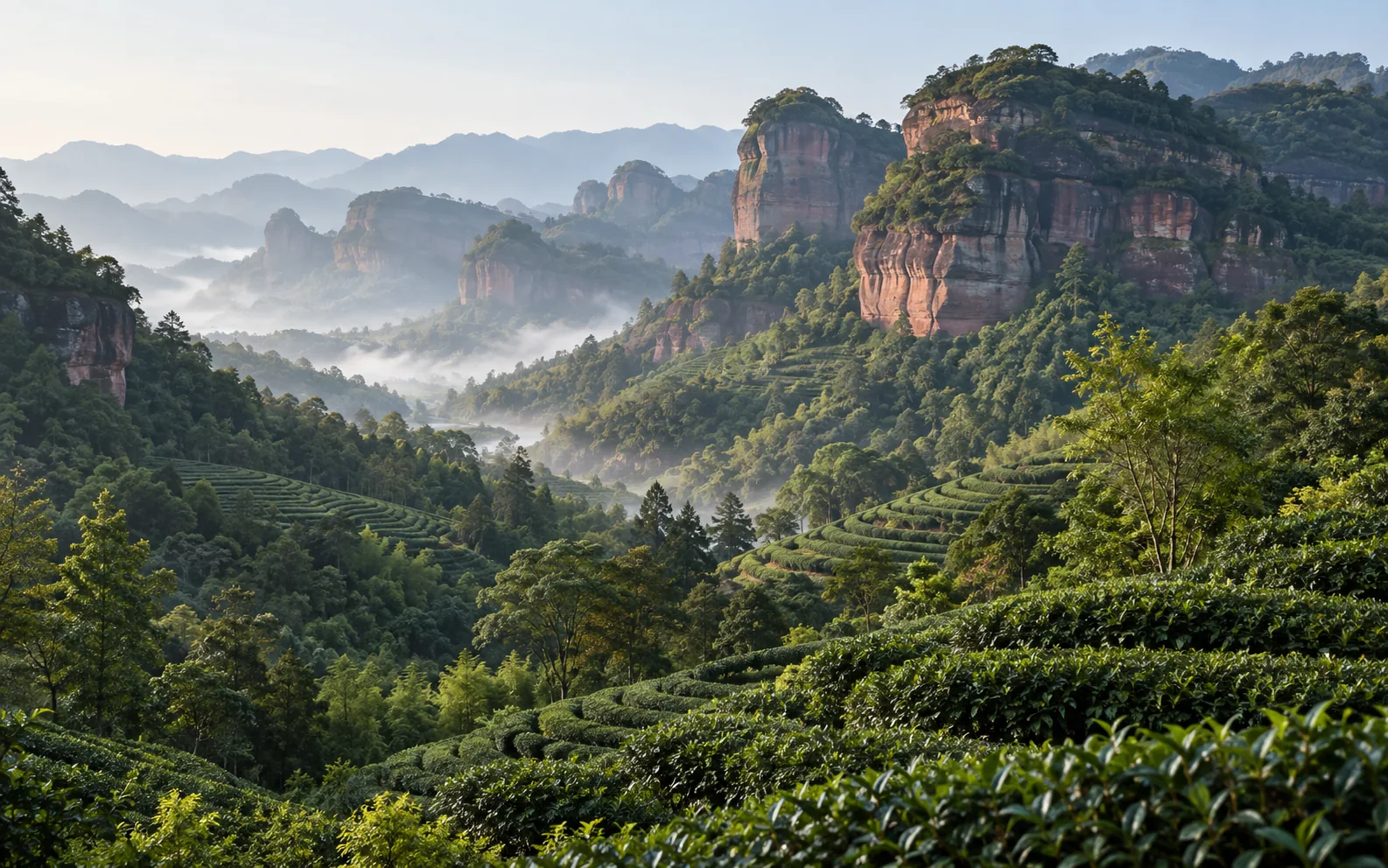
Editorial landscape illustration of forested cliffs and tea slopes inspired by Wuyi, Fujian

Atlas 01 / China · Landscape illustration

Place at a glance.

Region

Fujian, Southeast China

Landscape

Sandstone cliffs and subtropical forest

Look for

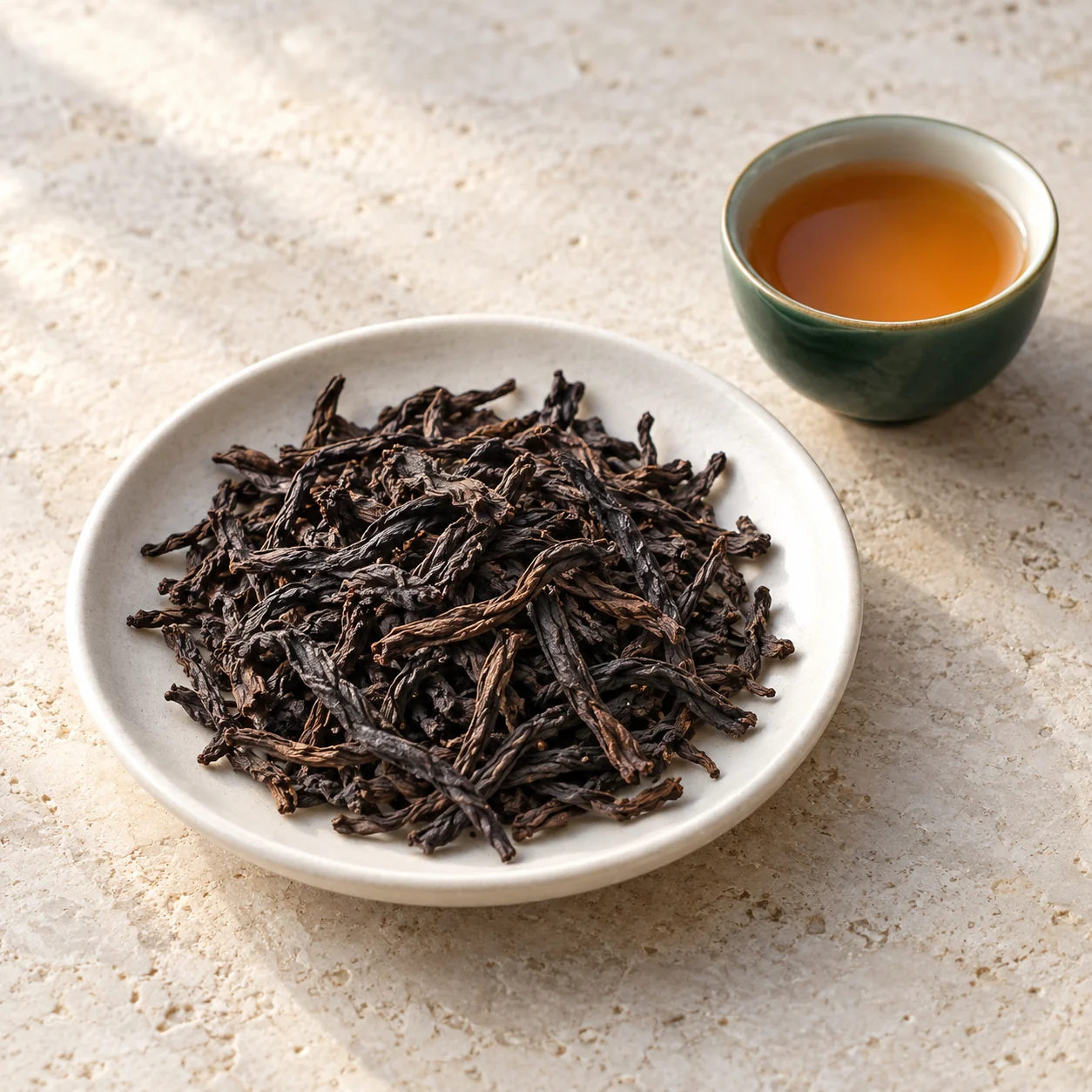
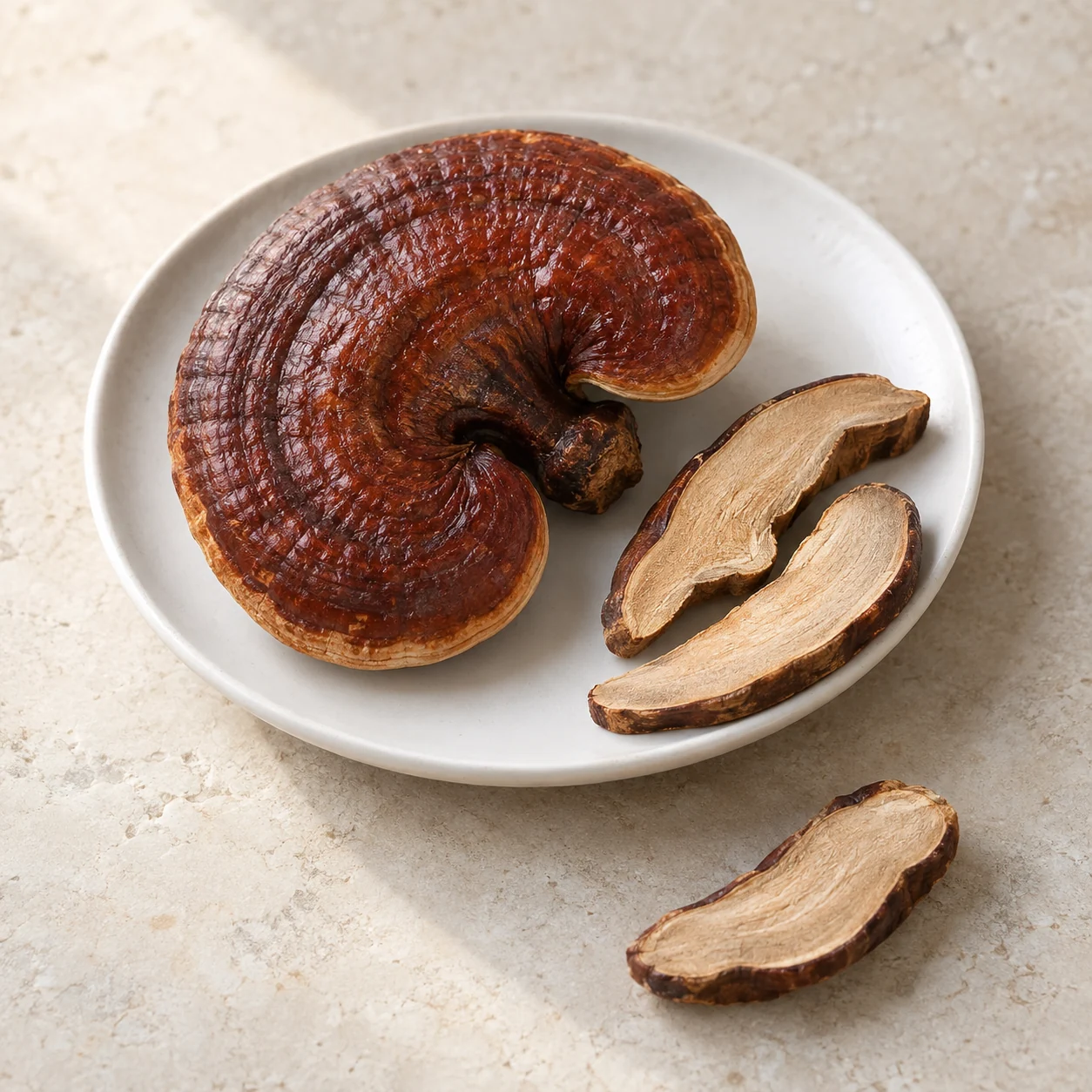
Loose leaf tea and prepared fungi

The landscape

A landscape with more than one story.

The Nine Bend River winds between red sandstone cliffs, while subtropical forest gives the mountains their deep green setting. UNESCO recognises both the natural landscape and its cultural history. Here, rock, water and vegetation belong in the same view.

Rock tea is our starting point because its craft is closely tied to Wuyi. Reishi adds a contemporary thread: Fujian's 2026 fungi programme lists a recommended project for Wuyishan reishi. That supports a regional connection, without establishing a particular farm, species or supply relationship.

Meet the ingredients.

Explore the ingredient and the regional context behind its name.

An oolong tradition associated with Wuyi. Explore the leaf, the roast and the maker's choices behind each cup.

Also known as lingzhi. A distinctive fungus with a long cultural presence, encountered today in several very different prepared forms.

Ways of making

From green leaf to rock tea.

A short introduction to tea making here. Reishi follows a separate cultivation and processing path.

01

Pick and wither

Fresh tea leaves are gathered and allowed to lose moisture. The maker begins working with a living material whose condition changes with the harvest.

02

Turn the leaves

The making stage known as zuoqing includes working and resting the leaves. It is part of the transition from green leaf to oolong.

03

Heat and roll

Heating fixes the developing character before rolling shapes the leaves. These are distinct operations within a much longer craft.

04

Dry and roast

Drying, sorting and roasting bring the tea towards its finished form. The maker's choices help explain why two rock teas can offer different cups.

In everyday culture

A place to notice the maker's hand.

Wuyi rock tea brings landscape and learned technique into the same conversation. Start by looking at the leaf and the way it has been made. A tea name becomes more interesting when it leads to a garden, a harvest and a maker's decisions.

Take that attention into the cup. Look at the dry leaves, notice the aroma after brewing and taste again as the tea cools. The mountains give the chapter its setting; the leaf and the making give you something to explore at the table.

The people behind the place.

This is an editorial guide to the region. We have not yet published a verified Wuyi grower or tea maker profile. A future profile will identify the producer, the growing location and the processing behind a specific product, with supporting provenance information.

From this origin.

Products and journal entries appear here when they are linked to this place. Read each product page for its specific sourcing details.

There are no products in this selection right now. Keep exploring the guides or browse the full shop.

Browse the shop →

Sources & context.

This guide describes a region and its traditions. It does not verify the origin, certification or effects of any product. Landscape and ingredient images are AI-generated editorial illustrations.

Continue the journey / China

Longxi

Where astragalus puts down roots.

Landscape illustration inspired by Longxi, with layered loess hills and cultivated fields under an open sky; not a location photograph
Select your currency
USD United States (US) dollar