
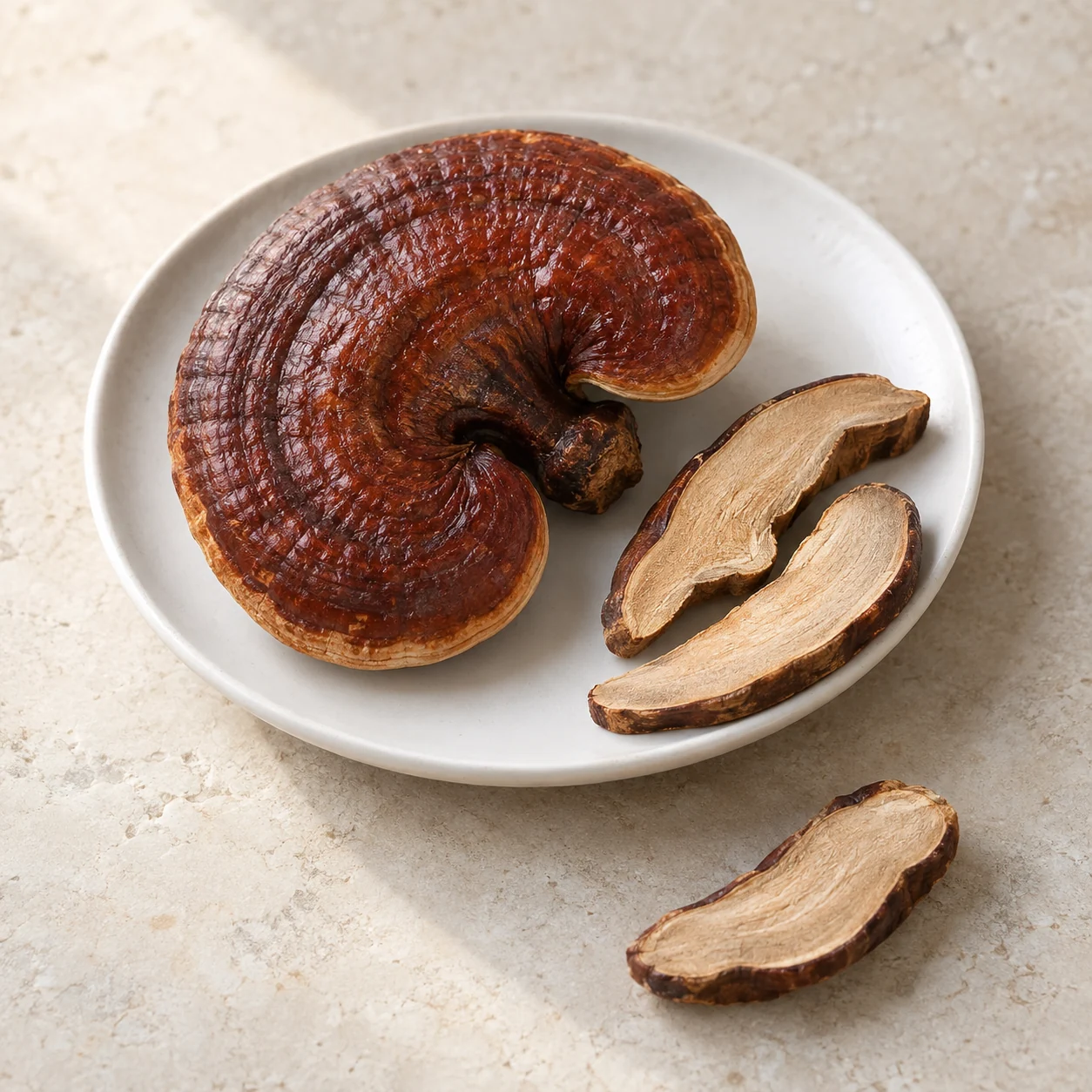
Start with the name, then the format.
Reishi refers to fungi within Ganoderma, a group whose species boundaries are still studied. The familiar name does not identify every detail of a product. A useful label tells you the species, material used and preparation. In Chinese decorative art, lingzhi also appears as an auspicious motif, giving it a cultural life beyond the packet.
自分に合った形式を見つけましょう。.
Dried pieces
Pieces or slices preserve something of the original form. Look for a product that identifies the material and states its intended preparation; a display specimen is not a kitchen ingredient.
Powder
The word powder needs more detail. Check whether the pack describes milled mushroom, spores or a prepared extract, and read the complete formulation.
Extract or blend
A prepared extract or mixed drink has its own formulation. It cannot be substituted spoon for spoon for dried pieces or another brand's powder.
A place to start.
Identify the product
Find the scientific name, ingredient list and material description. If the label only says reishi, ask the producer what that means for this product.
Read the intended use
Follow the finished product's directions. This guide introduces the ingredient and does not provide a personal dose or a recipe for an unidentified fungus.
Keep the label with it
Retain the original pack or record its batch and storage instructions. Close the container after use and follow the maker's advice for the particular format.
A cultural symbol is not a product claim.
Lingzhi's presence in art and herbal tradition is part of its history. It does not authenticate a specimen, establish its growing origin or demonstrate a health effect. We present the Wuyi connection as regional context.
What to look for.
Ask what material is used
Prefer a clear description of the species and material over a photograph of an impressive cap. Different preparations deserve their own information.
Separate growing and processing
A packing address may differ from the growing location. Look for a producer who explains both when making a specific origin claim.
Look for useful records
Batch information and a contactable producer make follow-up possible. Words such as forest or traditional should lead to details you can check.
A place behind the ingredient.
Follow the regional tradition in the World Atlas. This association describes cultural context, not the provenance of every product with this ingredient.
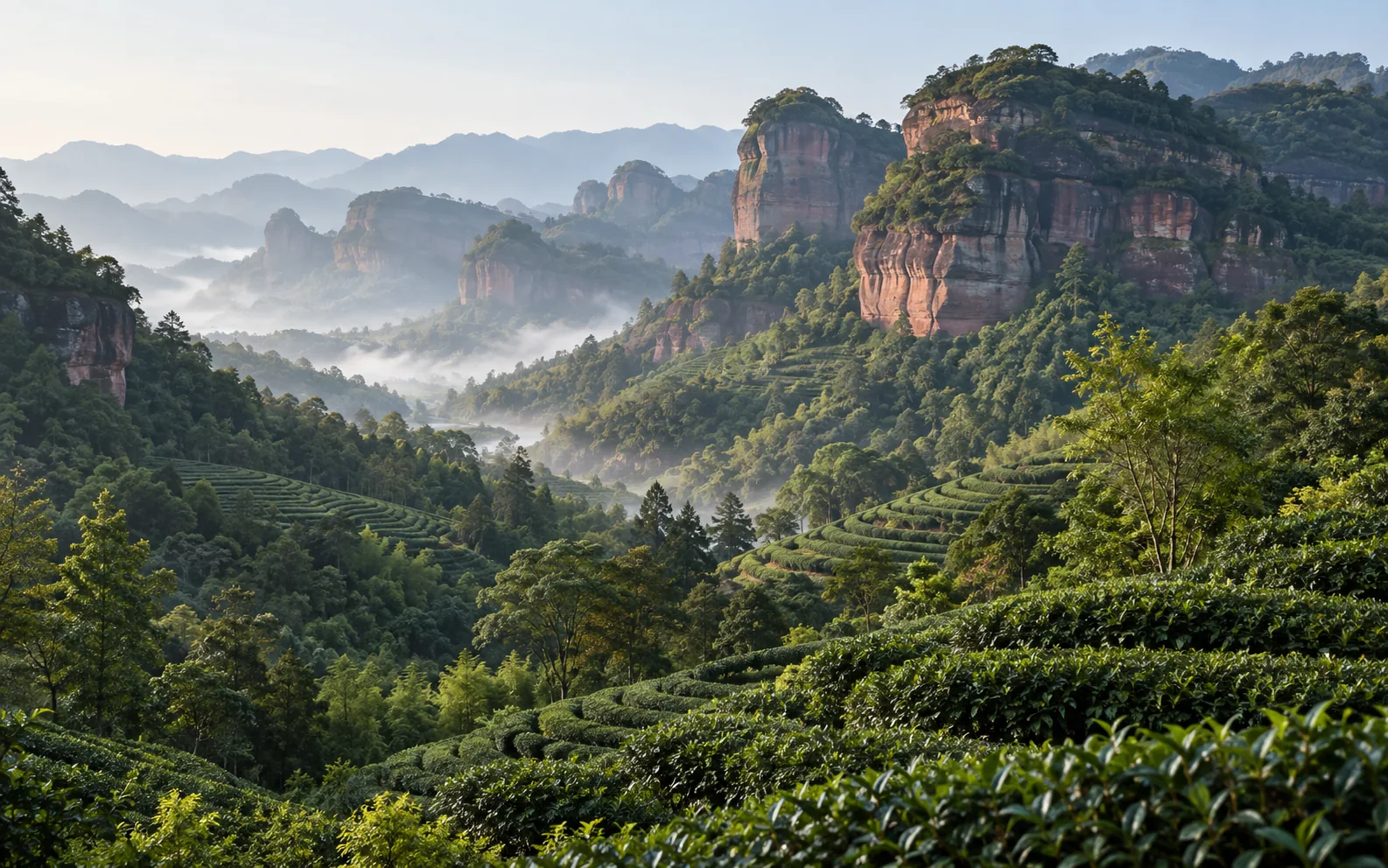
Fujian, Southeast China
Wuyi Mountains
Rock Tea · Reishi
Between sandstone, forest and tea.
Explore products with reishi.
Read the full ingredients and preparation details on each product.
There are no products in this selection right now. Keep exploring the guides or browse the full shop.
Browse the shop →Keep exploring.
武夷山にゆかりのある烏龍茶の伝統。一杯の茶に込められた茶葉、焙煎、そして製茶者のこだわりを探ってみましょう。.
その名に数々の特筆すべき点を持つ根。栽培、加工、そして完成品にまつわる情報を通じて、アジア人参について探ってみましょう。.