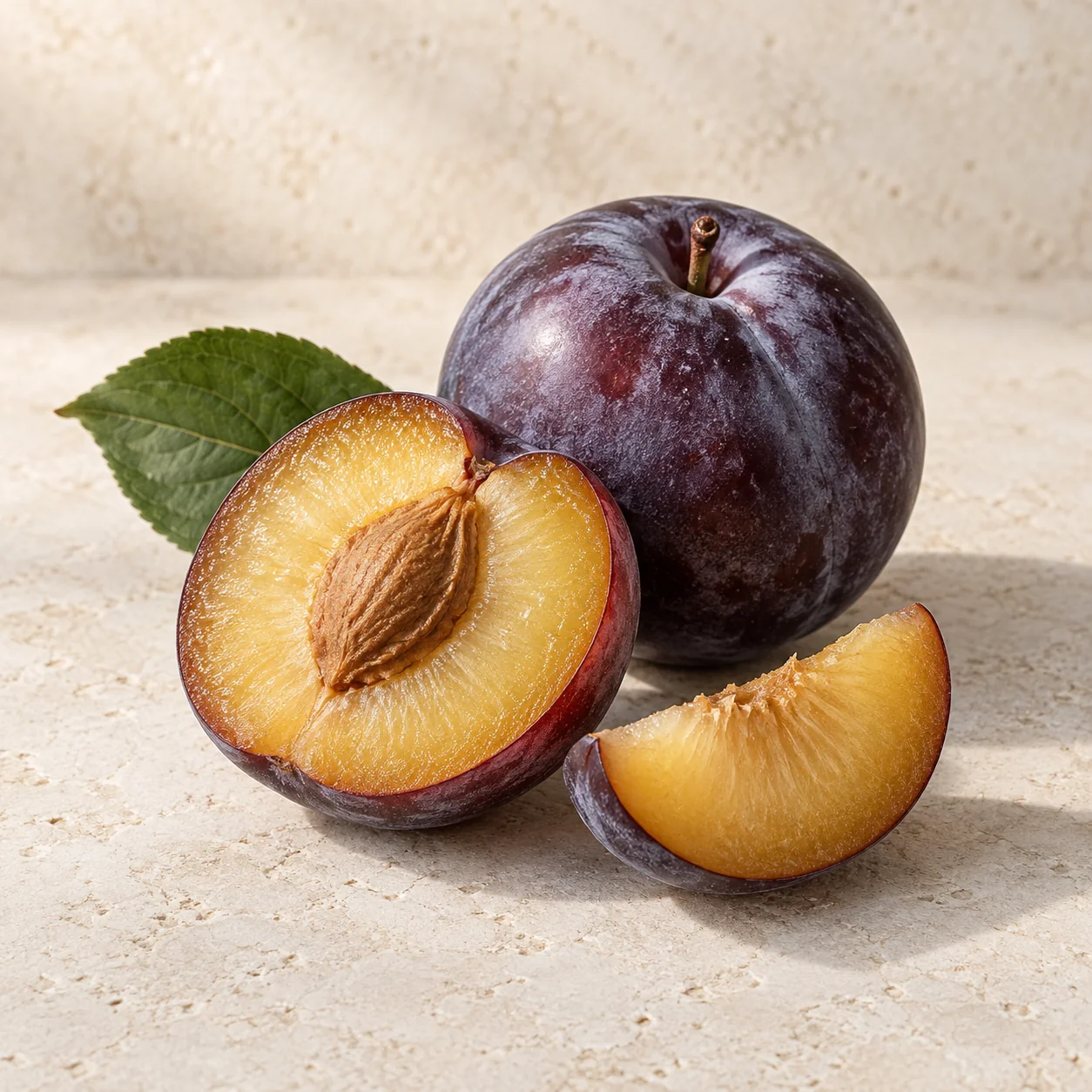
Plum
Juicy flesh, smooth skin and a balance of sweetness and acidity. Discover plums fresh, gently cooked or in a prepared fruit blend.
Taste the flesh and the skin together.
Plums can taste sweet or tart, with the skin often providing the sharper note. Ripeness and variety change the experience. A few fresh slices are a useful first taste; a cooked preparation introduces a softer texture. Let the fruit you have guide the pairing.
A place to start.
Choose the texture you want
Begin with fresh slices for a fruit bowl, or use a recipe for cooked plums when you want a softer topping.
Wash, cut and remove the stone
Wash the fruit before cutting. Remove the hard stone and check the flesh for any fragments before chopping or blending.
Pair a small portion
Try a few slices with plain yoghurt or another breakfast you enjoy. Taste before adding sweetness or a second fruit.
A little acidity can be part of the appeal.
Taste the plum before deciding how sweet the finished dish should be. Try one small portion first; the balance you enjoy may need very little adjustment.
What to look for.
Look for undamaged skin
Choose plums with smooth skin, without cuts, bruises or soft damaged spots.
Allow for ripeness
Firm, unripe plums can finish ripening at room temperature in a paper bag. Move ripe fruit to the refrigerator.
Check prepared versions
Read ingredients and after-opening directions for preserves and drinks. Pick the format that fits your actual recipe.
Explore products with plum.
Read the full ingredients and preparation details on each product.
Keep exploring.
Gentle sweetness with textures from crisp to tender. Get to know the pear variety before choosing how to enjoy it.
Juicy stone fruit with flavours ranging from sweet to distinctly tart. Begin with the cherry type, then choose the preparation.
Origins to explore.
Specific regional associations have not yet been documented for this guide.
Explore in the Atlas