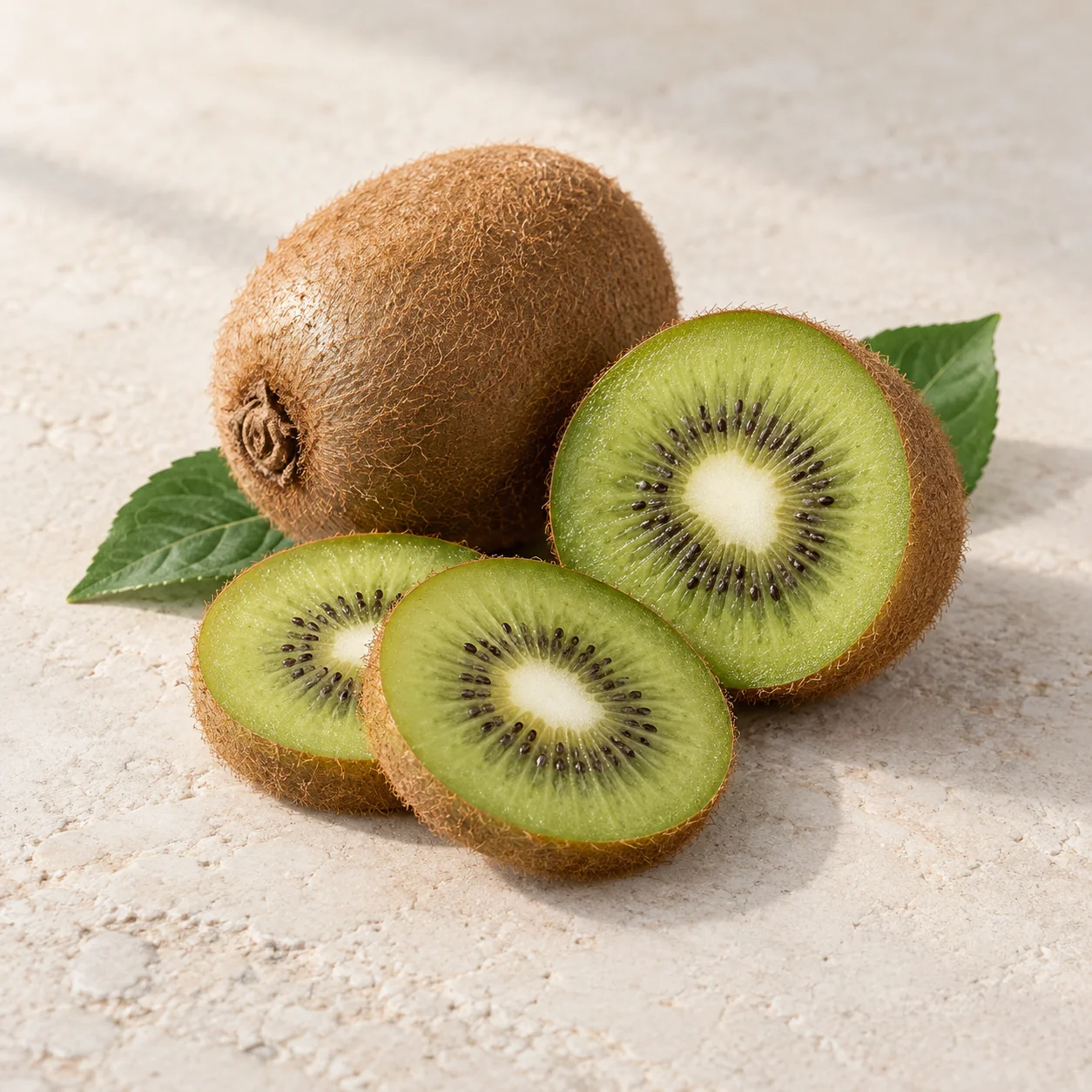
Kiwi
Juicy flesh, tiny seeds and a balance of sweetness and tartness. Ripeness changes the texture.
Choose the texture you want today.
Kiwifruit offers a different eating experience as it softens. Green and yellow-fleshed varieties can differ in colour and flavour. Fresh pieces and a prepared fruit blend each have their own texture. Kiwi appears in GREEN LIGHT and CHERRish SLEEP alongside different fruits and botanicals.
A place to start.
Check ripeness
Choose sound fruit and gently check firmness. Allow firm fruit to soften at room temperature if needed.
Rinse before cutting
Rinse the whole fruit, then peel or cut it for your chosen serving.
Make a small pairing
Try kiwi alongside apple or berries. Serve the portion you want and refrigerate remaining cut fruit.
Let ripeness guide the serving
Firm and softer fruit give different textures. For a packaged puree or drink, use the producer's directions rather than fresh-fruit storage advice.
What to look for.
Choose sound fruit
Avoid decay, major damage and leaking fruit. Skin colour alone does not establish ripeness.
Keep ripe fruit cool
Refrigerate ripe fruit to slow softening. Keep cut portions refrigerated.
Read the format
A kiwi-flavoured preparation may include other fruit, sweeteners or flavouring.
Explore products with kiwi.
Read the full ingredients and preparation details on each product.
Keep exploring.
Crisp fruit, mellow sweetness and a bright finish. A familiar starting point for food and fruit blends.
Leafy greens with a textured leaf and a distinct green flavour. Preparation changes the texture and intensity.
Juicy stone fruit with flavours ranging from sweet to distinctly tart. Begin with the cherry type, then choose the preparation.
Origins to explore.
Specific regional associations have not yet been documented for this guide.
Explore in the Atlas