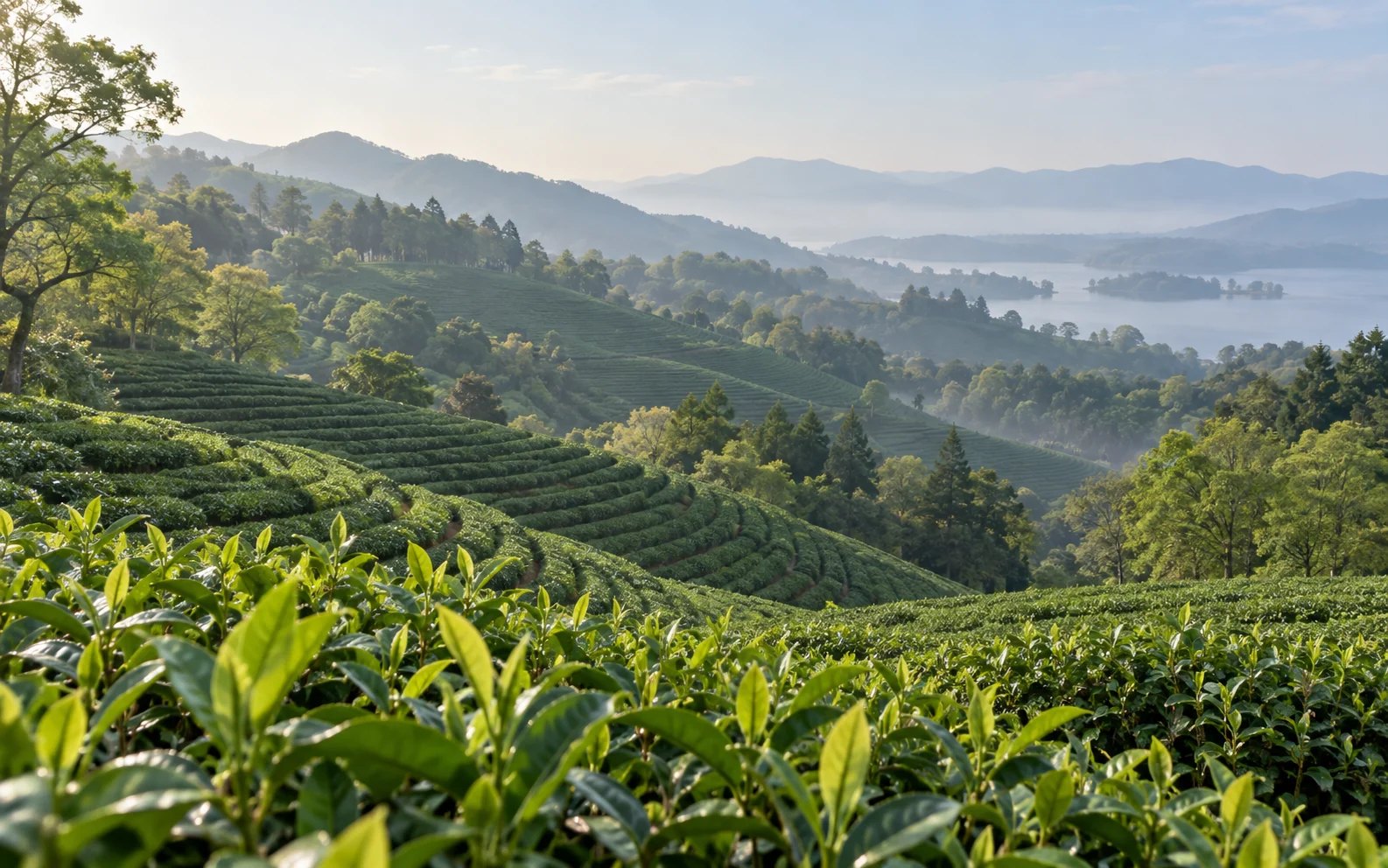
China / Ningxia, Northwest China
Zhongning
Red fruit under an open sky.
Follow the red of goji through irrigated fields and into everyday cooking. Zhongning makes a gentle bridge between a growing landscape and an ingredient familiar in the kitchen.
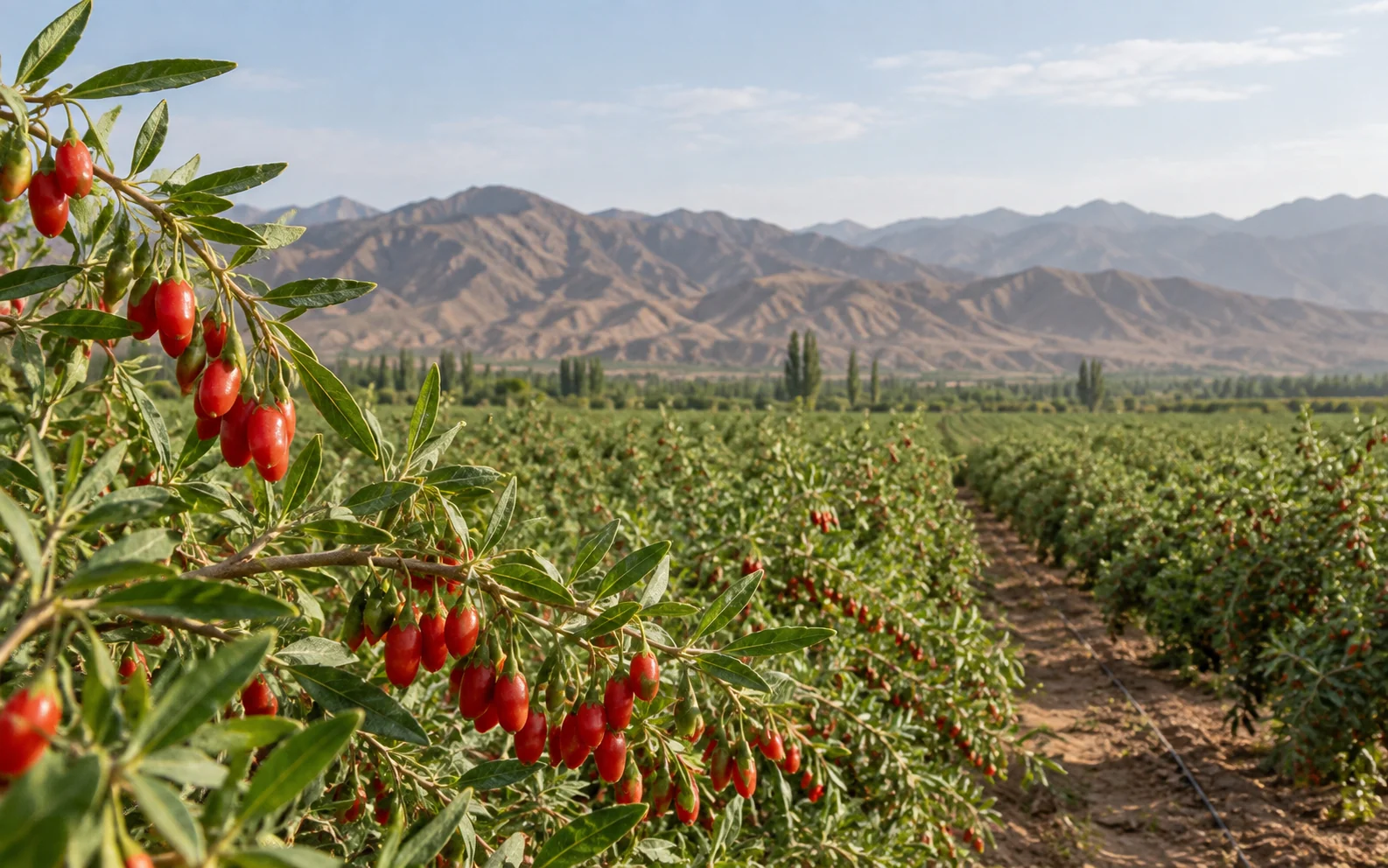
Atlas 04 / China · Landscape illustration
Place at a glance.
Region
Ningxia, Northwest China
Landscape
Yellow River plain and irrigated fields
Look for
Dried berries and prepared fruit
The landscape
Water belongs in the picture.
Ningxia's agriculture department describes Zhongning through the meeting of river water, alluvial soils and a dry, bright climate. The Yellow River and Qingshui River help explain why a landscape that looks arid can also support cultivated fields.
The crop gives the fields a seasonal rhythm as berries ripen and are gathered. Drying then carries the harvest into a different form, turning soft fruit into the red ingredient that appears in pantry jars and cooked dishes.
Meet the ingredient.
Explore the ingredient and the regional context behind its name.
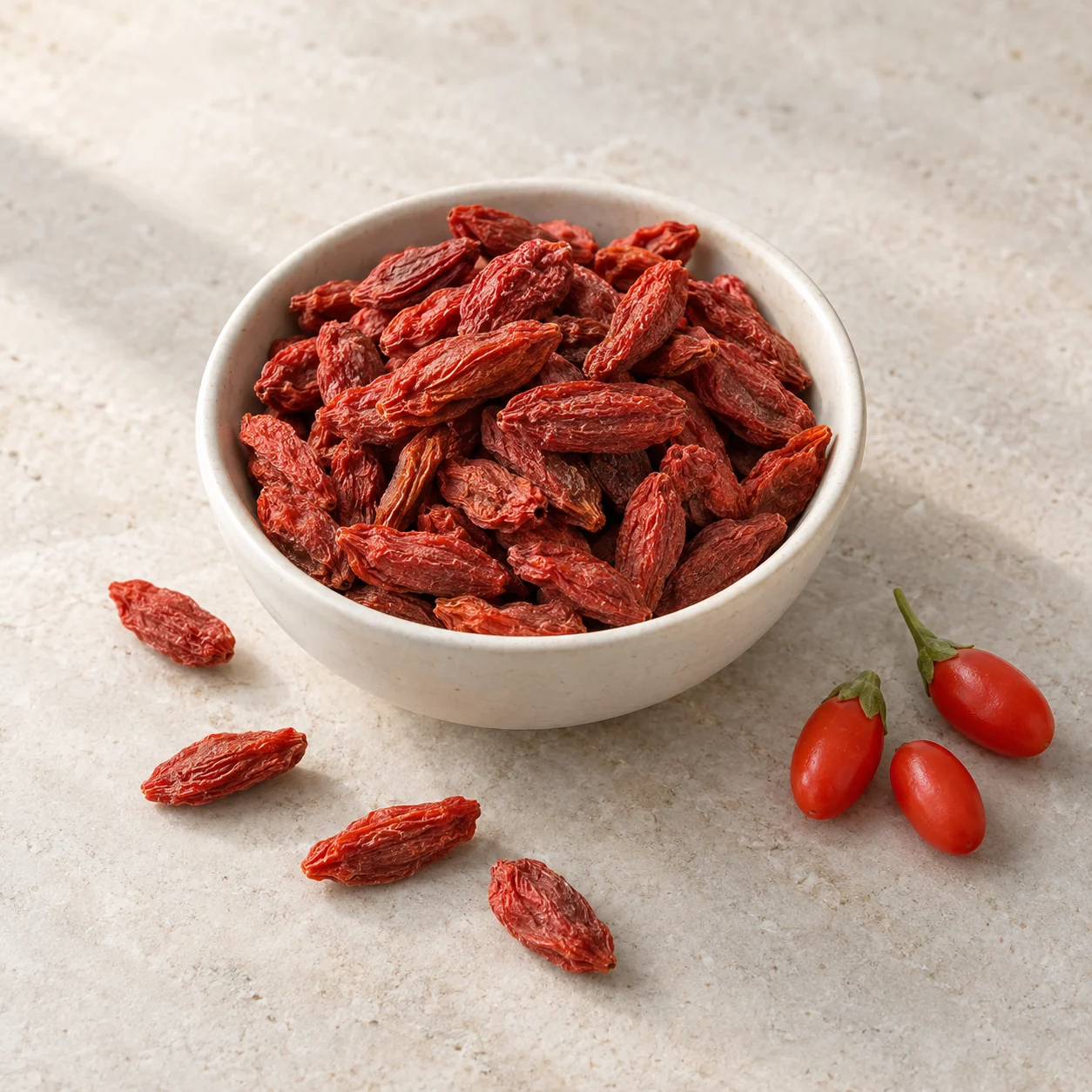
Pequeñas bayas rojas que suelen aparecer en sopas, bebidas y tarros de despensa. Empieza por la fruta y el formato que tengas.
Ways of making
From soft fruit to pantry ingredient.
Drying changes the way goji travels, keeps and appears at the table.
01
Grow with water
Irrigation belongs alongside sunlight in the regional story. Look beyond the red fruit to the fields and water systems that support the crop.
02
Pick the fruit
Ripe berries are gathered over the harvest season. The fruit is handled before being prepared for the particular fresh or dried product.
03
Dry
Goji can be dried with sunlight or drying equipment. This stage changes the texture and brings the fruit towards the form most familiar in the pantry.
04
Sort and pack
Dried fruit is selected and graded before packing. The harvest can then travel beyond the field as whole berries or continue into a prepared drink or other product.
In everyday culture
A small fruit with a place at the table.
Regional accounts describe goji in soups, drinks and steamed foods. These kitchen appearances offer an approachable starting point: a little fruit, a familiar preparation and a new colour or texture to notice.
One regional example folds chopped dried goji into steamed buns. It is a small but vivid detail: the same berry that colours the field can also punctuate a piece of everyday food.
The people behind the place.
This chapter is an editorial introduction to Zhongning. We have not yet published a verified goji grower profile. A future maker feature will connect a named producer to a growing location, harvest and drying process, with provenance information for the featured product.
From this origin.
Products and journal entries appear here when they are linked to this place. Read each product page for its specific sourcing details.
There are no products in this selection right now. Keep exploring the guides or browse the full shop.
Browse the shop →Sources & context.
This guide describes a region and its traditions. It does not verify the origin, certification or effects of any product. Landscape and ingredient images are AI-generated editorial illustrations.
Continue the journey / China