
China / Guangdong, Southern China
Xinhui
Citrus, sunlight and the passing years.
An orchard harvest becomes an ingredient kept for another season. In Xinhui, chenpi opens a story of citrus peel, careful drying and the attention that storage requires.

Atlas 06 / China · Landscape illustration
Place at a glance.
Region
Guangdong, Southern China
Landscape
Southern citrus country
Look for
Dried peel, cut pieces and blends
The landscape
Time is part of the preparation.
Xinhui's cultural authority describes a local craft built around opening the fruit, turning the peel, drying it and managing its storage. The ingredient is associated with the local Xinhui mandarin, rather than any peel that happens to look similar.
The work continues after the peel first dries. Temperature, humidity and the condition of the stored peel need attention. Here, keeping the harvest is an active craft, with opening, turning and drying giving way to the slower work of storage.
Meet the ingredient.
Explore the ingredient and the regional context behind its name.
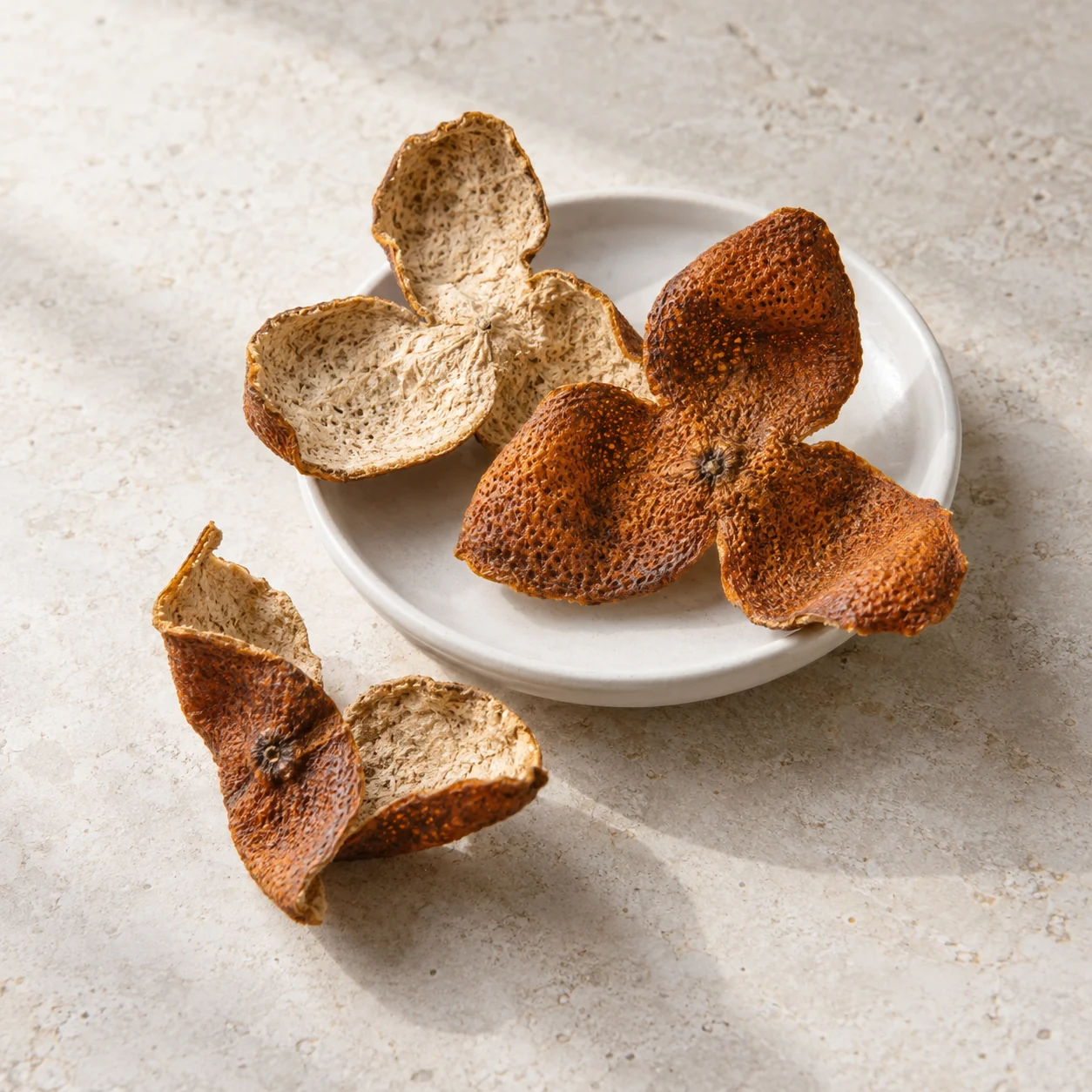
Cáscara de cítricos seca: un ingrediente con un lugar especial en la cocina y la tradición. Descubre la fruta, su preparación y los antecedentes que se esconden tras una historia que viene de lejos.
Ways of making
Keeping something from the harvest.
The familiar peel shape is the beginning of a longer process.
01
Pick
Fruit is gathered at different stages of maturity. That choice is part of the maker's starting material, before drying or storage begins.
02
Open and turn
The peel is opened into connected sections and turned. Its distinctive form comes from handling, not simply from leaving a whole fruit to dry.
03
Dry
Sun drying removes moisture from the opened peel. The producer attends to the material as it changes from fresh and flexible to dry.
04
Store and attend
Managed storage and periodic attention form part of the local craft. The producer returns to the peel over time, watching the conditions in which it is kept.
In everyday culture
An ingredient for the kitchen, too.
Xinhui's account places chenpi in both herbal tradition and daily cooking. Regional examples include tea preparations, dishes and seasonings. For 1010 World, that culinary thread is a way to explore aroma and the work of preservation.
In Chakeng village, a local cultural account describes chenpi in sweet red bean soup and flavoured peanuts. These familiar foods make the ingredient's story tangible: citrus preserved from one harvest becomes an accent at another table.
The people behind the place.
This is an editorial guide to Xinhui's chenpi tradition. We have not yet published a verified producer or storage-house profile. Future product features will need a named maker and supporting records for growing origin, harvest and any stated aging period.
From this origin.
Products and journal entries appear here when they are linked to this place. Read each product page for its specific sourcing details.
There are no products in this selection right now. Keep exploring the guides or browse the full shop.
Browse the shop →Sources & context.
This guide describes a region and its traditions. It does not verify the origin, certification or effects of any product. Landscape and ingredient images are AI-generated editorial illustrations.
Continue the journey / China